Interactive Storytelling AI
Introduction
Introduction
Interactive Storytelling AI: Blending Narratives with Real-time Problem Solving
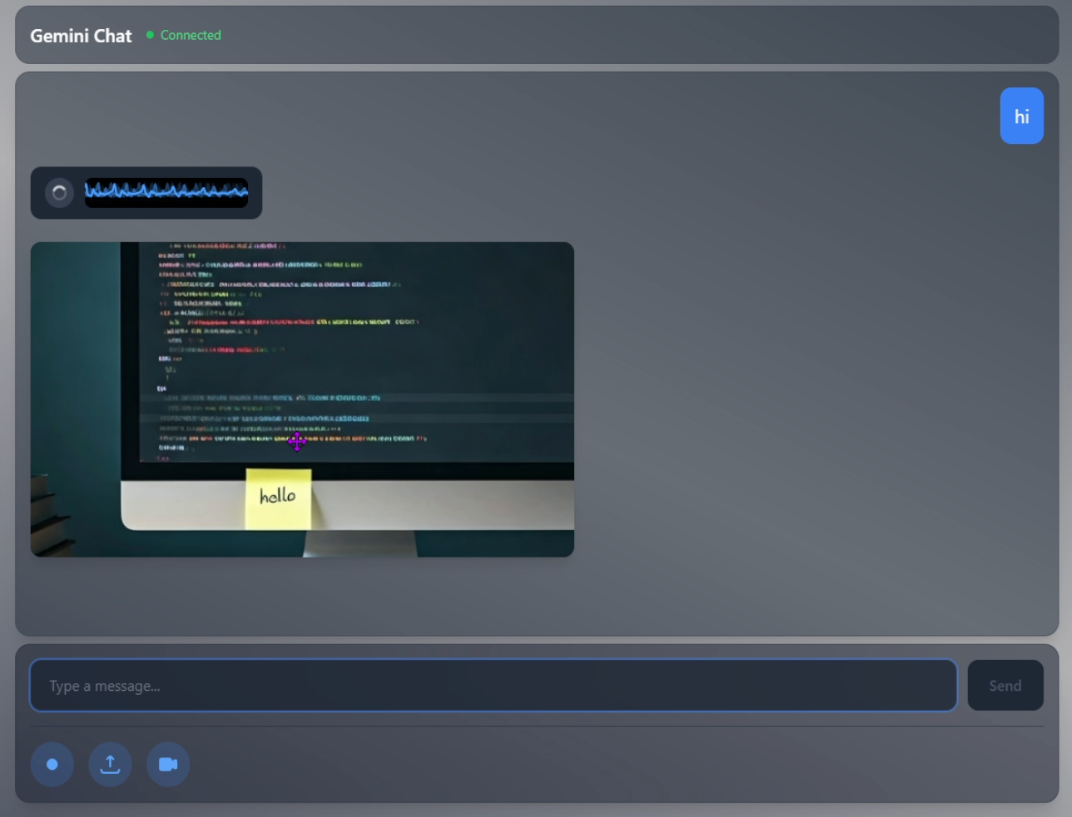
Our Interactive Storytelling AI represents a breakthrough in immersive digital experiences, combining real-time AI-generated narratives, dynamic image creation, and interactive problem-solving. This technology creates personalized adventures that adapt to user inputs, blending elements of traditional storytelling with puzzle-solving and visual engagement.
Technology Overview
Technology Overview
Technology Overview: Real-time AI in Action
At its core, our Interactive Storytelling AI leverages several cutting-edge technologies working in concert:
Real-time Processing:
- WebSocket connections for instant communication
- Asynchronous message handling
- Streaming responses for fluid interaction
Multimodal AI:
- Text generation with Gemini 2.0 Flash
- Dynamic image creation based on narrative context
- Audio processing for voice interaction
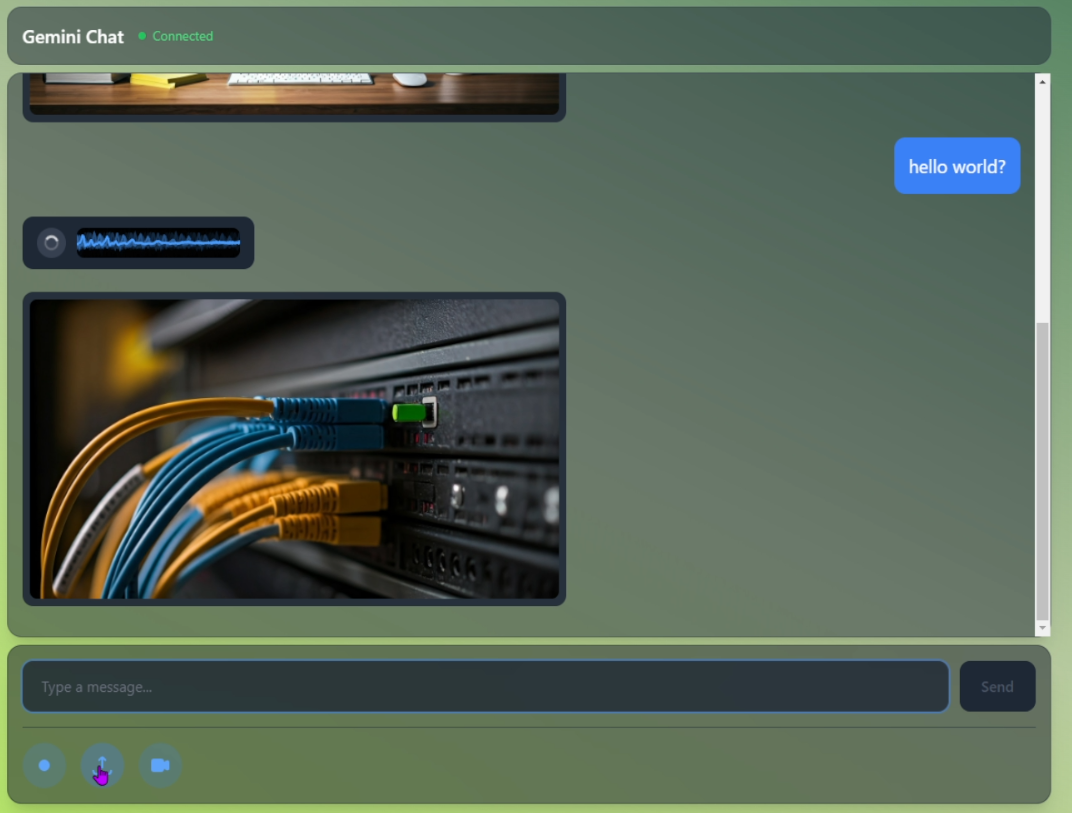
The system processes multiple types of input—text, images, and audio—and generates contextually appropriate responses that advance the narrative while challenging the user with puzzles and riddles. As shown in the images, the system presents riddles like "What is the first common thing you learn to make when you start coding?" and adapts the environment based on user responses.
Technical Architecture
Technical Architecture
Technical Architecture: Behind the Scenes
The Interactive Storytelling AI is built on a sophisticated architecture designed for real-time performance and seamless integration of multiple AI capabilities:
Core Components:
- WebSocket Manager: Handles bidirectional communication between client and server
- Message Processing Pipeline: Routes different message types (text, audio, image) to appropriate handlers
- Response Generation System: Creates contextually relevant narrative elements and challenges
- State Management: Tracks conversation history and user progress through the narrative
# Simplified flow diagram
User Input (Text/Audio/Image) → WebSocket → Message Queue
                                    ↓
                           Message Processing
                                    ↓
                         Gemini 2.0 Flash Model
                                    ↓
                      Response Generation (JSON)
                                    ↓
                   Content Rendering (Text/Images)
                                    ↓
                        WebSocket → Client UI
The system uses asyncio for concurrent processing, allowing it to handle multiple message types simultaneously while maintaining a fluid user experience. The architecture is designed to be scalable, with separate queues for different message types and a robust error handling system.
Key Features
Key Features
Key Features: What Makes It Special
Our Interactive Storytelling AI offers several innovative features that set it apart from traditional narrative experiences:
Adaptive Storytelling:
- Narratives that branch based on user decisions
- Dynamic difficulty adjustment for puzzles
- Personalized story elements based on user preferences
Multimodal Interaction:
- Text, voice, and image-based inputs
- Real-time environment generation
- Contextual visual clues and hints
Intelligent Puzzle Design:
- Riddles that test knowledge and creativity
- Progressive challenge system
- Contextual hints based on user progress
Seamless Experience:
- Low-latency responses (less than 500ms)
- Streaming text for natural conversation flow
- Graceful error handling and recovery
Use Cases
Use Cases
Use Cases: Beyond Entertainment
While our Interactive Storytelling AI excels as an entertainment platform, its applications extend far beyond simple amusement:
Education:
The system can be adapted to create immersive educational experiences that combine storytelling with subject-specific challenges:
- Historical adventures that teach through exploration
- Science puzzles that reinforce concepts through application
- Language learning through contextual conversation
Corporate Training:
Businesses can leverage the platform for engaging training scenarios:
- Simulated customer service scenarios
- Crisis management training
- Technical skill development through problem-solving
Therapeutic Applications:
The adaptive nature of the system makes it suitable for certain therapeutic contexts:
- Cognitive exercises for memory enhancement
- Stress reduction through guided narrative experiences
- Social skills development in safe, simulated environments
Challenges & Solutions
Challenges & Solutions
Challenges and Solutions: Pushing Technical Boundaries
Developing a real-time interactive storytelling system presented several significant challenges:
Challenge: Latency Management
Real-time interaction requires minimal latency, but generating high-quality content takes time.
Solution:
- Implemented streaming responses for immediate feedback
- Optimized message queue processing with asyncio
- Pre-generated content for common narrative branches
Challenge: Narrative Coherence
Maintaining a coherent story while adapting to unpredictable user inputs is difficult.
Solution:
- Developed a context management system that tracks narrative state
- Implemented guardrails to keep stories on track while allowing flexibility
- Created a fallback system for handling unexpected inputs
Challenge: Multimodal Integration
Coordinating text, images, and audio in a seamless experience is technically complex.
Solution:
- Created a unified message processing pipeline
- Developed a modality-agnostic state representation
- Implemented parallel processing for different modalities
Challenge: Resource Efficiency
Real-time AI processing is resource-intensive, especially with multiple concurrent users.
Solution:
- Implemented efficient connection pooling
- Optimized model parameters for faster inference
- Developed a dynamic resource allocation system
Future Development
Future Development
Future Development: What's Next
Our Interactive Storytelling AI is continuously evolving. Here are some exciting developments on our roadmap:
- Collaborative Storytelling: Enabling multiple users to participate in the same narrative
- Enhanced Visual Generation: More detailed and contextually accurate environment rendering
- Emotional Intelligence: Adapting narrative tone based on detected user emotions
- Persistent Worlds: Long-running narratives with state preservation between sessions
- User-Generated Content: Tools for users to create their own interactive stories
We're also exploring integration with emerging technologies such as AR/VR for even more immersive storytelling experiences, and investigating ways to make the system more accessible to users with different abilities and preferences.
Conclusion
Conclusion
Conclusion: The Future of Interactive Storytelling
Our Interactive Storytelling AI represents a significant leap forward in how we experience narratives in the digital age. By combining real-time AI processing, multimodal interaction, and adaptive storytelling, we've created a platform that blurs the line between passive consumption and active participation.
As AI technology continues to advance, the possibilities for interactive storytelling will only expand, creating new opportunities for education, entertainment, training, and therapy. We're excited to be at the forefront of this emerging field, pushing the boundaries of what's possible with real-time AI.
Ready to Experience the Future of Storytelling?
Whether you're looking to create engaging educational content, develop innovative training programs, or explore new forms of entertainment, our Interactive Storytelling AI can help you create immersive, adaptive experiences that captivate your audience.